How to Start a Junk Removal Business?
Starting a junk removal business is one of the most accessible paths to entrepreneurship today. With low barrier-to-entry costs and a constant demand for decluttering services, anyone with a truck and a strong work ethic can build a profitable brand. However, simply owning a vehicle isn't enough to scale in a competitive digital landscape. To truly compete, you need a professional presence, which is why most successful owners prioritize a high-converting junk removal website to capture local leads while they are out on the job. If you want to dominate your local market from day one, investing in professional web design for junk removal company services is the smartest move you can make to ensure your phone starts ringing consistently.

Phase 1: Planning and Legal Foundations
Before you haul your first load, you need a solid business structure. Many new owners rush into buying a truck without setting up the back-end, which leads to legal headaches later.
Choose Your Entity: Decide between an LLC or a Sole Proprietorship. An LLC is generally recommended to protect your personal assets from business liabilities.
Get Insured: Junk removal involves heavy lifting and entering private property. You need general liability insurance and, if you hire help, workers' compensation.
Permit and Licenses: Every city has different rules for waste hauling. Contact your local department of sanitation to see if you need a "Non-Hazardous Waste Hauler" permit.
Develop a Pricing Model: Will you charge by the cubic yard, by the fraction of the truckload, or a flat fee? Most pros use a tiered system based on how much space the junk takes up in the truck.
Phase 2: Equipment and Logistics
You don't need a brand-new $100,000 dump truck to get started, but your equipment must be reliable.
The Vehicle: A heavy-duty pickup with a dump trailer is a great starter setup. As you grow, move toward an integrated dump truck with high sides.
Essential Tools: Invest in high-quality dollies, appliance straps, shovels, rakes, and industrial-grade brooms.
Disposal Partnerships: You need to know where every item goes before you pick it up. Establish accounts at local landfills and recycling centers. For items in good condition, partner with organizations like Habitat for Humanity ReStore to reduce your dump fees and help the community.
Phase 3: Marketing and Digital Dominance
In 2026, your "storefront" is the internet. While word-of-mouth is great for slow growth, digital marketing is the engine for scaling.
SEO-Focused Content: Your website needs to rank for terms like "furniture removal" and "basement cleanout."
Google Business Profile: This is essential for showing up in the "Local Map Pack." Collect reviews aggressively.
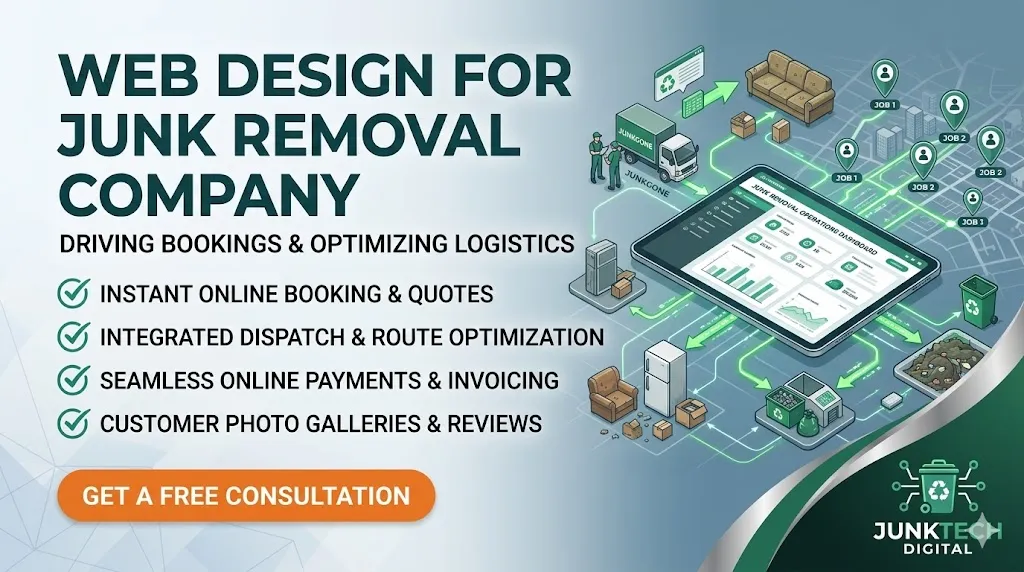
Professional Web Design: A DIY website often looks unprofessional and scares away high-paying commercial clients. A site built specifically for junk removal will include "Book Now" buttons, clear service areas, and mobile optimization.
Building for the Long Term
Starting is about the hustle, but staying in business is about systems. By combining physical hard work with a sophisticated digital strategy, you create a barrier between you and the "guy with a truck" down the street. A professional website acts as your 24/7 salesperson, allowing you to focus on the heavy lifting while the leads roll in automatically.