

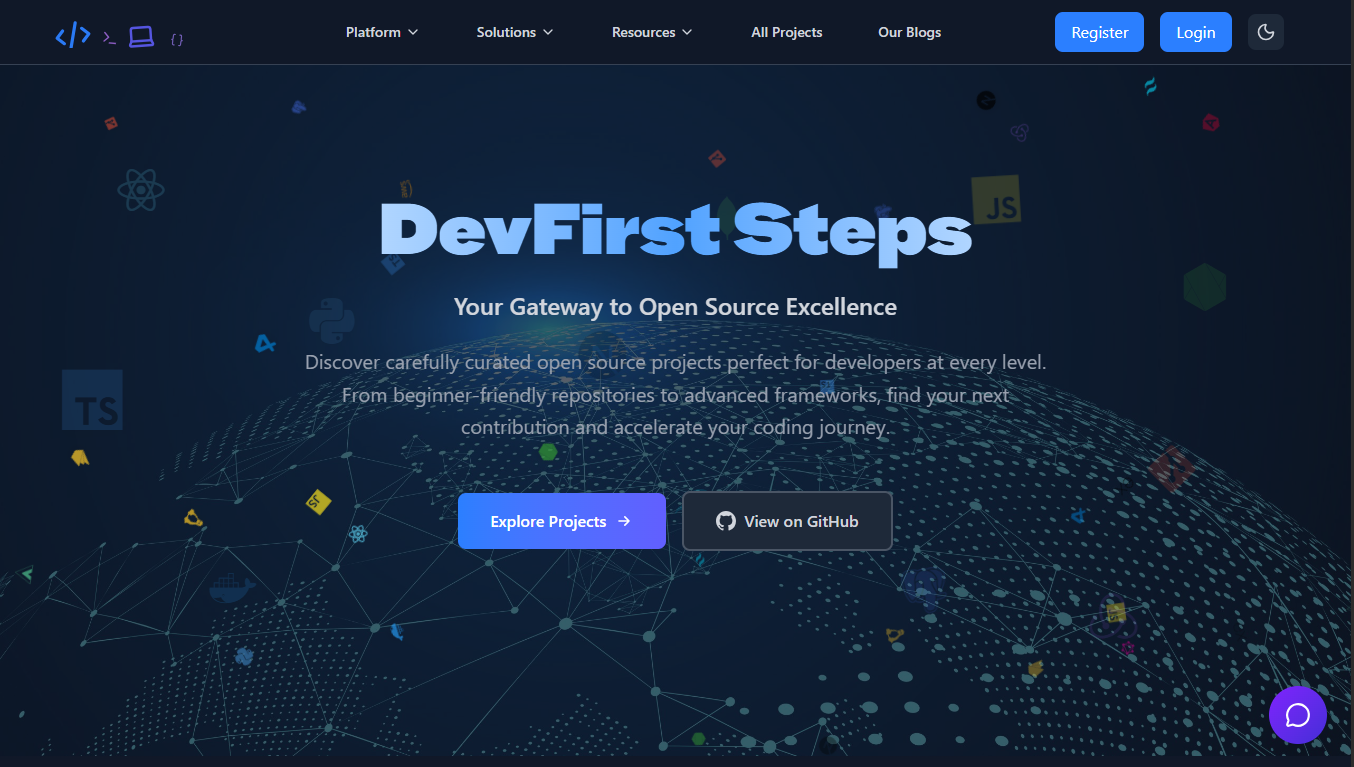
DevFirst Steps is a comprehensive platform designed to demystify the open-source ecosystem for developers at all levels. By bridging the gap between talent and opportunity, the platform provides a curated environment where beginners can find their first "Good First Issue" and experienced developers can discover advanced frameworks and tools. It acts as a centralized hub for discovery, mentorship, and collaboration, turning the often-intimidating world of open source into an accessible and rewarding journey.
What sets DevFirst Steps apart is its data-driven approach to project discovery. Unlike traditional aggregators, we provide:
AI-Driven Personalization: Custom project suggestions generated by GPT-4o-mini based on your specific tech stack and interests.
Real-Time Health Metrics: Instant weighted scores for GitHub repositories, analyzing responsiveness, merge speed, and contributor retention.
Integrated Mentorship Ecosystem: A seamless workflow to connect with experienced mentors and schedule guidance sessions directly within the platform.
The fundamental mission of DevFirst Steps is to:
Lower the barrier to entry for open-source contributions.
Promote high-quality software development through curated best practices.
Foster a culture of mentorship and knowledge sharing within the global developer community.
Help maintainers find consistent, quality contributors by surfacing active and healthy projects.
The open-source world is vast and often chaotic. New developers face several hurdles:
Project Overload: Not knowing where to start or which projects are beginner-friendly.
Dead Repositories: Wasting time on projects that are no longer maintained.
Technical Isolation: Lack of guidance when facing complex codebases or contribution workflows.
Skill Mismatch: Difficulty finding projects that align with their current expertise and growth goals.
DevFirst Steps solves these problems by injecting intelligence and community support into the contribution process. By providing "Health Scores" (🟢 Healthy, 🟡 Moderate, 🟠 Low Activity), users can make informed decisions about where to invest their time. The AI suggestions ensure that every developer finds a project that challenges them without overwhelming them. This creates a positive feedback loop: developers gain confidence, and open-source projects receive much-needed high-quality contributions, strengthening the entire software ecosystem.
The platform uses OpenAI's GPT-4o-mini to analyze user profiles and interests. Users benefit from personalized roadmaps that suggest both existing GitHub repositories and custom practice project ideas to build their skills from scratch.
We aggregate multiple GitHub API data points—such as average issue response time and PR merge speed—to calculate a weighted health score. This allows users to avoid "dormant" projects and focus on repositories where their contributions will actually be reviewed and merged.
Users can apply to be mentors or seek guidance from experts. This feature provides a structured environment for scheduling sessions and managing collaboration requests, ensuring that no developer feels alone in their learning journey.
Beyond code, the platform offers a space for developers to share knowledge through blogs and discussions. Gamified features like voting and community stats encourage active participation and networking.
To maintain motivation, the platform tracks user contributions and activity points. Badges and leaderboard rankings provide recognition for consistent contributors, making the learning process engaging and fun.
Real-Time Data Aggregation: Calculating health metrics required fetching data from multiple GitHub API endpoints in parallel while staying within rate limits. We overcame this by implementing efficient asynchronous processing using Promise.all and a specialized weighted scoring algorithm.
AI Response Streaming: To ensure a smooth user experience during complex AI generations, we implemented Server-Sent Events (SSE). This allows project suggestions to stream to the user in real-time rather than waiting for the entire response to be generated.
Complex Authentication: Integrating NextAuth with Firebase and a custom MongoDB backend required a robust token management system. We solved this by implementing a layered middleware approach and JWT-based session handling.
Maintaining Quality Mentorship: Ensuring that mentors provide valuable guidance was a priority. We addressed this by building a rigorous application and approval workflow, where admins review mentor profiles before they are listed on the platform.
User Engagement: Building a community from scratch is difficult. We implemented gamification elements and social features like blogs and discussions to foster a sense of belonging among users.
Framework: Next.js 15 (App Router)
Styling: Tailwind CSS, Framer Motion (Animations), Lucide React (Icons)
State & UI: React Hook Form, Radix UI, Shadcn/UI
Notifications: SweetAlert2, React Toastify
Data Visualization: Recharts (for health metrics graphs)
Runtime: Node.js, Express
Database: MongoDB (NoSQL)
Authentication: NextAuth.js, Firebase, BCrypt.js (for password hashing)
API Integration: Axios (with auto-retry logic), GitHub REST API
AI Integration: OpenAI GPT-4o-mini API
DevFirst Steps is more than just a project list; it is a meticulously crafted ecosystem designed to empower the next generation of open-source contributors. By combining cutting-edge AI, real-time metrics, and a supportive community, we are making open source accessible, measurable, and deeply rewarding. Whether you are writing your first line of code or managing a top-tier framework, DevFirst Steps is your partner in achieving open-source excellence.